
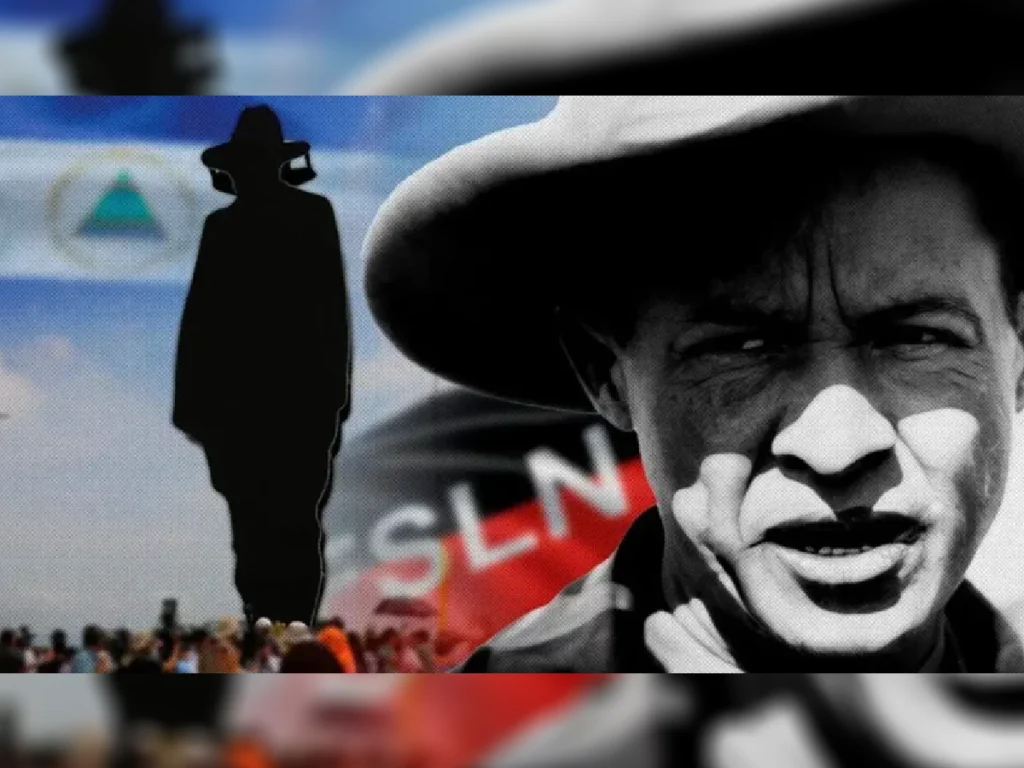
One way to evaluate a nation’s sovereignty is to assess the relationship between its national dimension of peace and prosperity, on the one hand, and, on the other, its international dimension in terms of independence, participation and cooperation. Since January 2007, during what compañero Fabrizio Casari considers its third stage, the Sandinista Popular Revolution has been exemplary in affirming a popular sovereignty that responds in an inclusive and successful way to the needs and aspirations of Nicaragua’s people. In both dimensions, the national and the international, it is a concept of sovereignty evolving naturally from the model of the People President, which projects in its foreign policy the same values it cultivates nationally, namely, the imperative of Peace, stability and security, respect among equals and solidarity-inspired cooperation for the Common Good.
This highly coherent concept of sovereignty has deep roots in Nicaragua’s historic struggle against foreign intervention, a history shared in one way or another with many countries of the majority world. In the “We Have a Nation” presentations on the proposed electoral reforms, made around the country by the Special Commission of the National Assembly and its president, Dr. Gustavo Porras, a constant theme has been how the defense of sovereignty in Nicaragua has evolved during different historical eras. It has been a story of how foreign greed and ambition towards Nicaragua takes advantage of disunity among Nicaraguans to attack, invade and meddle in the internal affairs of the country.
It is a history which highlights how every foreign intrusion provokes both episodes of ignominious betrayal along with impressive patterns of dignified resistance and extraordinary heroism. It is history which has evolved to express the increasingly clear relationship between national sovereignty and the right of Nicaraguan families to the fullest human development. When our General Augusto C. Sandino affirmed that «My sword will defend National Decorum and bring Redemption to the oppressed,” he summarized that profound relationship whereby realizing sovereignty must include, not only resisting predatory invaders, but also freedom and justice as revolutionary values to ensure a true democracy for the Common Good of all.
Comandante Carlos Fonseca and the founding compañeros of the Sandinista National Liberation Front assimilated and brought together, as fundamental principles, the values of Sandinismo developed by General Sandino and Blanca Aráuz. As compañero Aldo Díaz Lacayo commented in 2019 in relation to the then national and international context, “General Sandino is current, no one can say this situation can be faced without the ideas of General Sandino. We Nicaraguans know this, and we have no doubt at all, we know Daniel’s position is the right one: To continue in the current moment with the ideas of General Sandino.”
As compañero Xavier Diaz-Lacayo Ugarte has observed “Sandinismo links peace with human dignity. It cannot exist for some sectors and not others, in a context of exclusion and extreme inequality. In Nicaragua, one’s neighbor is recognized as a subject of rights, respect and solidarity. This dimension is key because it transforms peace into a lived experience, directly influencing citizen perception and participation.” And it is important to remember how, under the leadership of Comandante Daniel, during all the years of US terrorist aggression, Nicaragua’s foreign policy developed as a central element of sovereignty faithful to those values and principles of Sandinismo.
A sovereign and independent foreign policy
The historical program of the Sandinista Popular Revolution treated the matter of Nicaragua’s foreign policy as an integral part of the struggle to “forge a free, prosperous and revolutionary homeland… a Nicaragua without exploitation, without oppression, without backwardness, a free, progressive and independent homeland.» For the first time in the country’s history, the Sandinista National Liberation Front guaranteed a patriotic foreign policy of absolute national independence, without foreign interference and promoting authentic universal peace with the other peoples of the world based on relations of mutual respect, fraternal collaboration among peoples and cooperation without conditions.
Even before the Triumph in 1979, Sandinista diplomacy had developed its foreign relations with the governments of the region in order to achieve a broad international condemnation of the genocidal barbarism of the Somoza regime. The consequent international isolation of the dictatorship was essential to facilitate the eventual Triumph of July 19th and to establish a revolutionary government committed to defending Nicaragua’s full sovereignty.
Then, in the face of the terrorist war imposed by the government of President Ronald Reagan with the complicity of the country’s oligarchy, successful Sandinista diplomacy guided by Comandante Daniel along with our Chancellor of Dignity, Father Miguel d’Escoto, was crucial in the defense of national sovereignty, based always on the principles of mutual respect, solidarity-based cooperation and an unquestionable commitment to peace.
The accumulated experience of the Contadora group’s regional peace processes and the Esquipulas Agreements, as well as the successful historical case against the U.S. government’s terrorism before the International Court of Justice, made it possible to overcome the U.S. imposed state of war. The integrity of the FSLN’s commitment to the Nicaraguan people’s aspiration for peace achieved the first peaceful handover of government between opposing political forces in the history of Nicaragua.
From that point, Sandinismo has undertaken the long and difficult process of recovering a popular revolutionary sovereignty in all its dimensions. In recent years this process has gone hand in hand with the progressive construction by the majority world of a new world order that takes up the original ideals of the Non-Aligned Movement of the 1950s.
In our times, we are dealing with even more complex challenges in a global environment, which increasingly require solidarity and responsible cooperation among the nations of the world. Thanks to our Co-Presidency of Comandante Daniel and Compañera Rosario, Nicaragua is recognized throughout the majority world for its dignified and consistent sovereign position in the face of these challenges, for example in relation to Climate Change or the global regulation of Artificial Intelligence, among many other issues of international importance.
Similarly, the vast majority of countries in the world respect Nicaragua for its unwavering solidarity against the genocidal US blockade of Cuba and the merciless genocidal campaign against the Palestinian people.
It is worth highlighting the great difference between the revolutionary popular sovereignty of Nicaragua which responds to the needs and aspirations of its people and the merely formal varieties of sovereignty of other countries, both internally and externally, which respond to the interests of national oligarchies and their foreign masters.
It is progressively more and more clear that Nicaragua’s revolutionary sovereignty aligns it with the vanguard of contemporary progress towards a truly democratic, multipolar world, of those international forces who faithfully uphold the values of the United Nations Charter of non-aggression, non-interference, solidarity-based cooperation, respect among equals and the defense of these essential principles of international law.
As our Co-President Comandante Daniel constantly affirms in relation to peace and regional integration: «We have to defend Sovereignty in order to have Peace. If we defend sovereignty, all of us Central Americans, we will have Peace, and if there is Peace, there will be progress, there will be well-being, for everyone.»
And also our Co-President Compañera Rosario has insisted “…Nicaragua’s Government of Reconciliation and National Unity, all too familiar with the policy of intervention and meddling of US imperialism which tries and seeks, unsuccessfully thanks to the struggles of the world’s Peoples, to dominate the world, our government demands, we demand, respect for the Sovereignty, Independence, and Will of the Peoples, because that is what is just, right and essential.”